
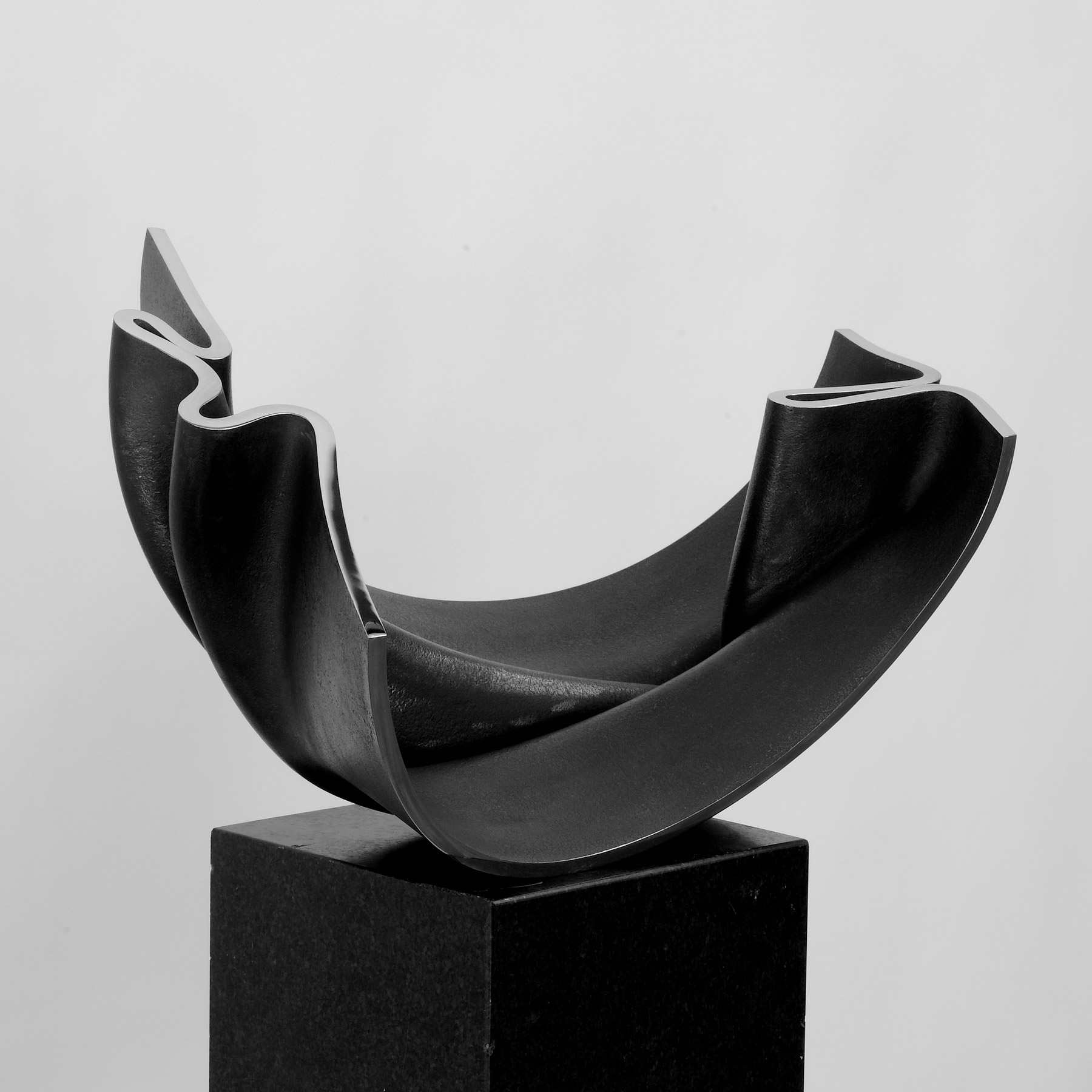
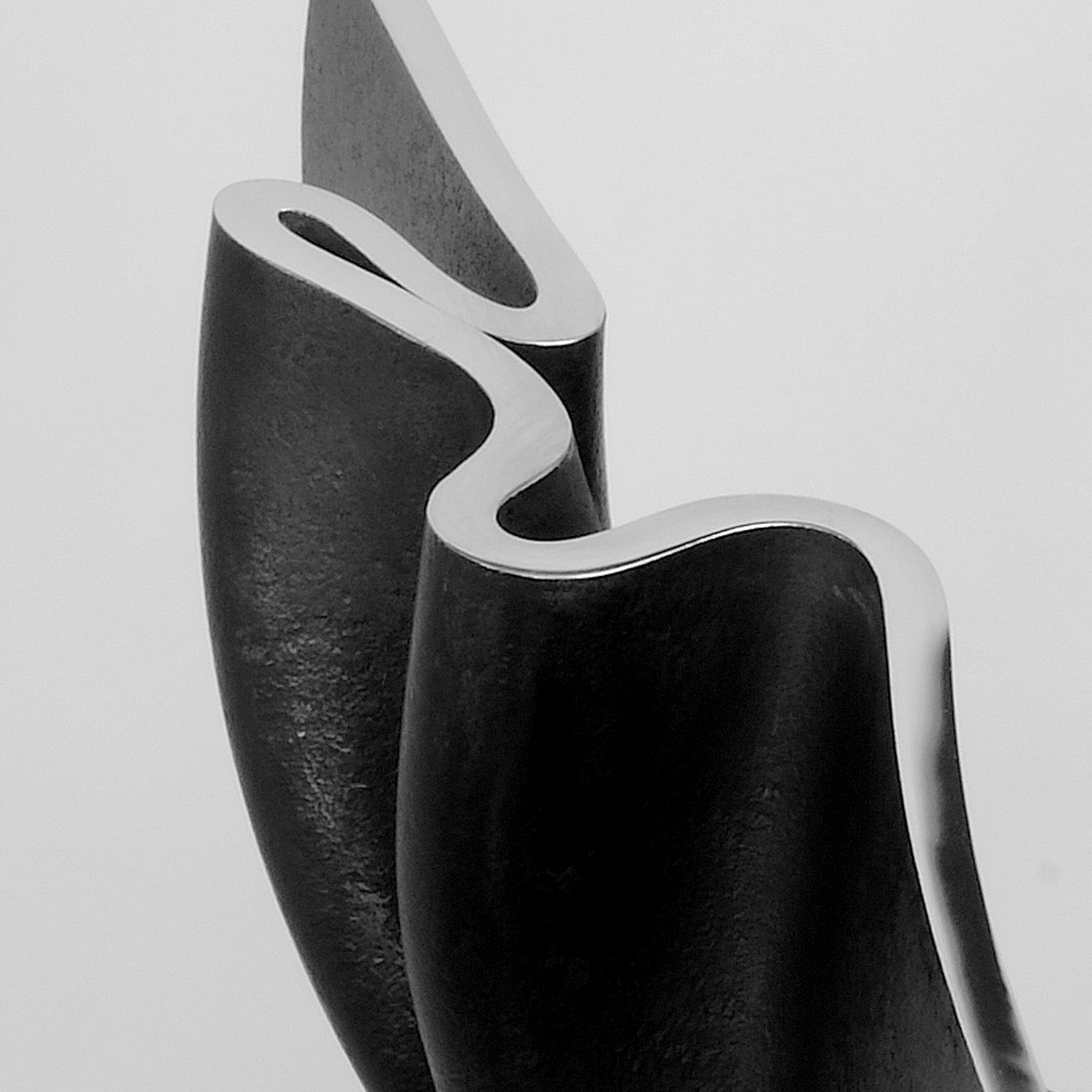
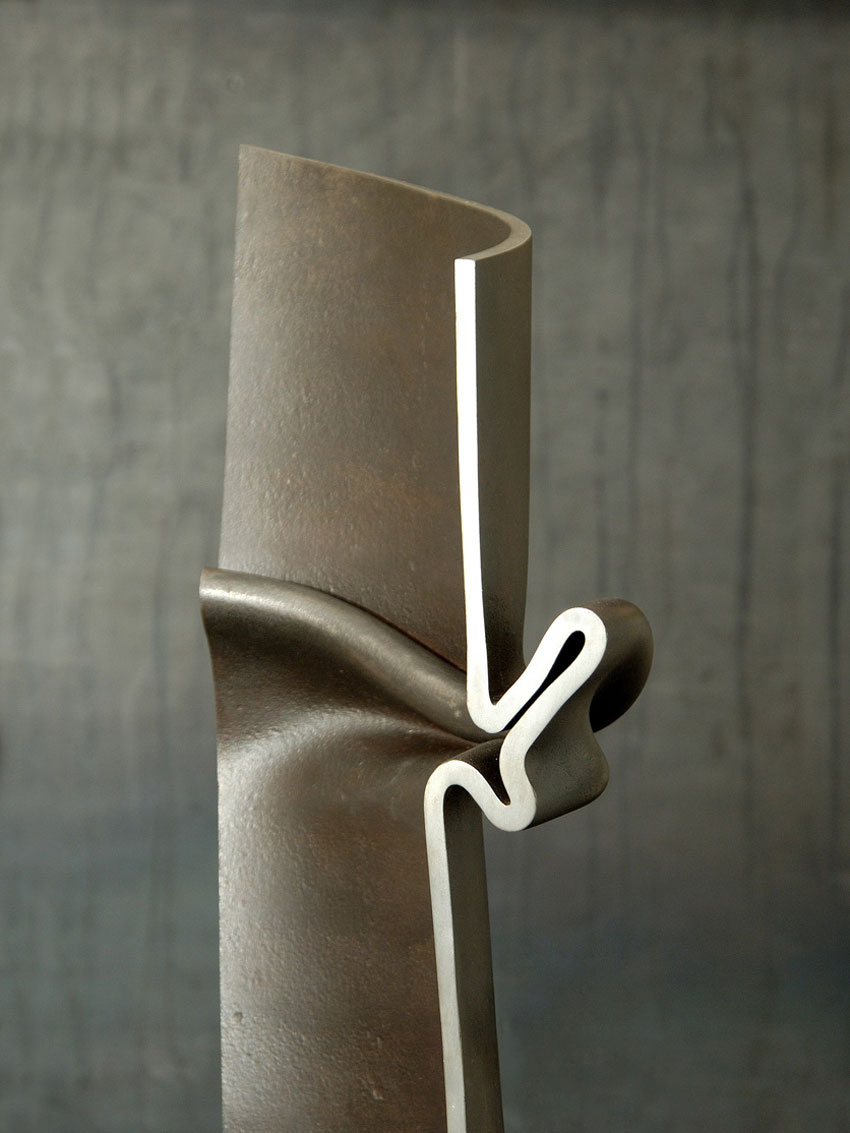
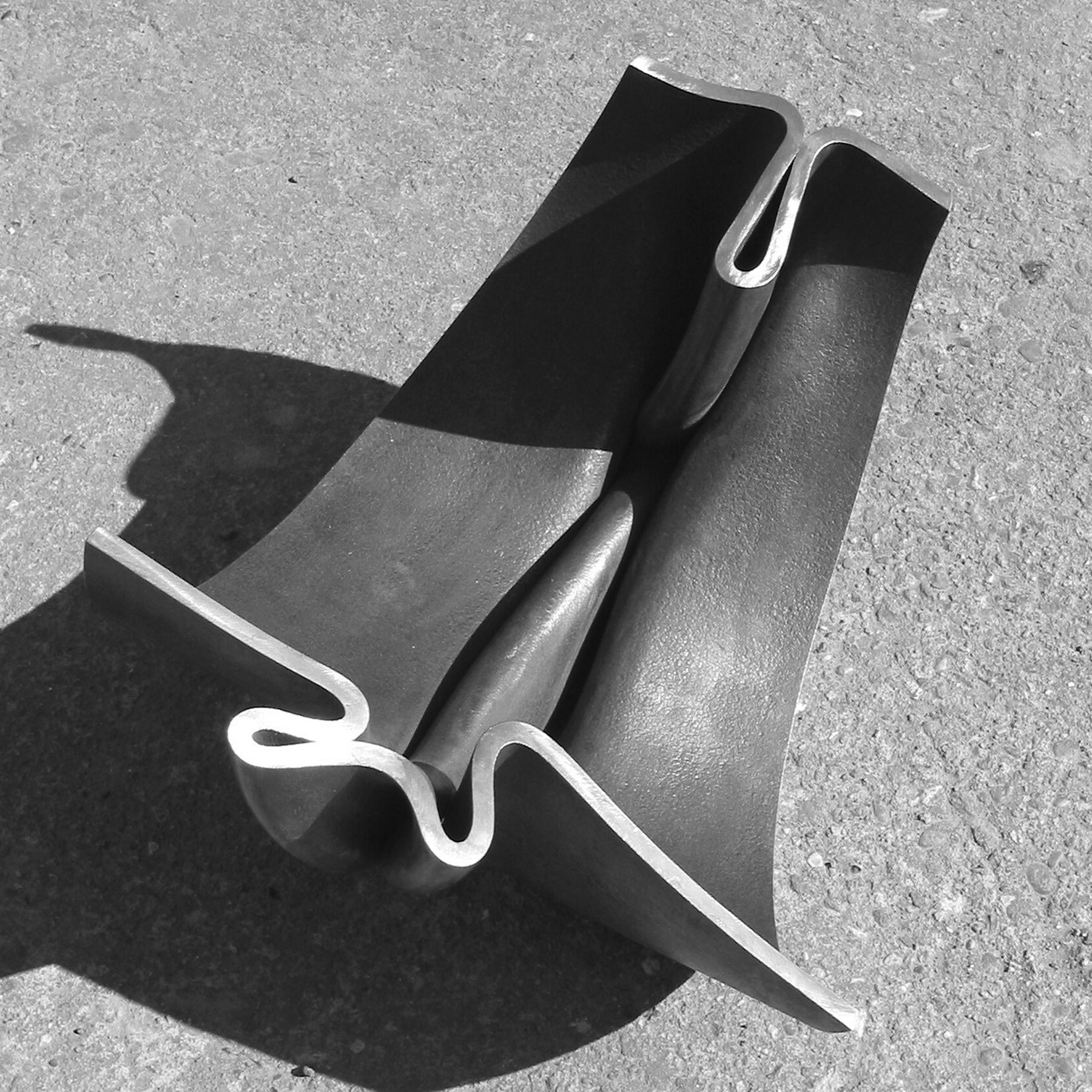
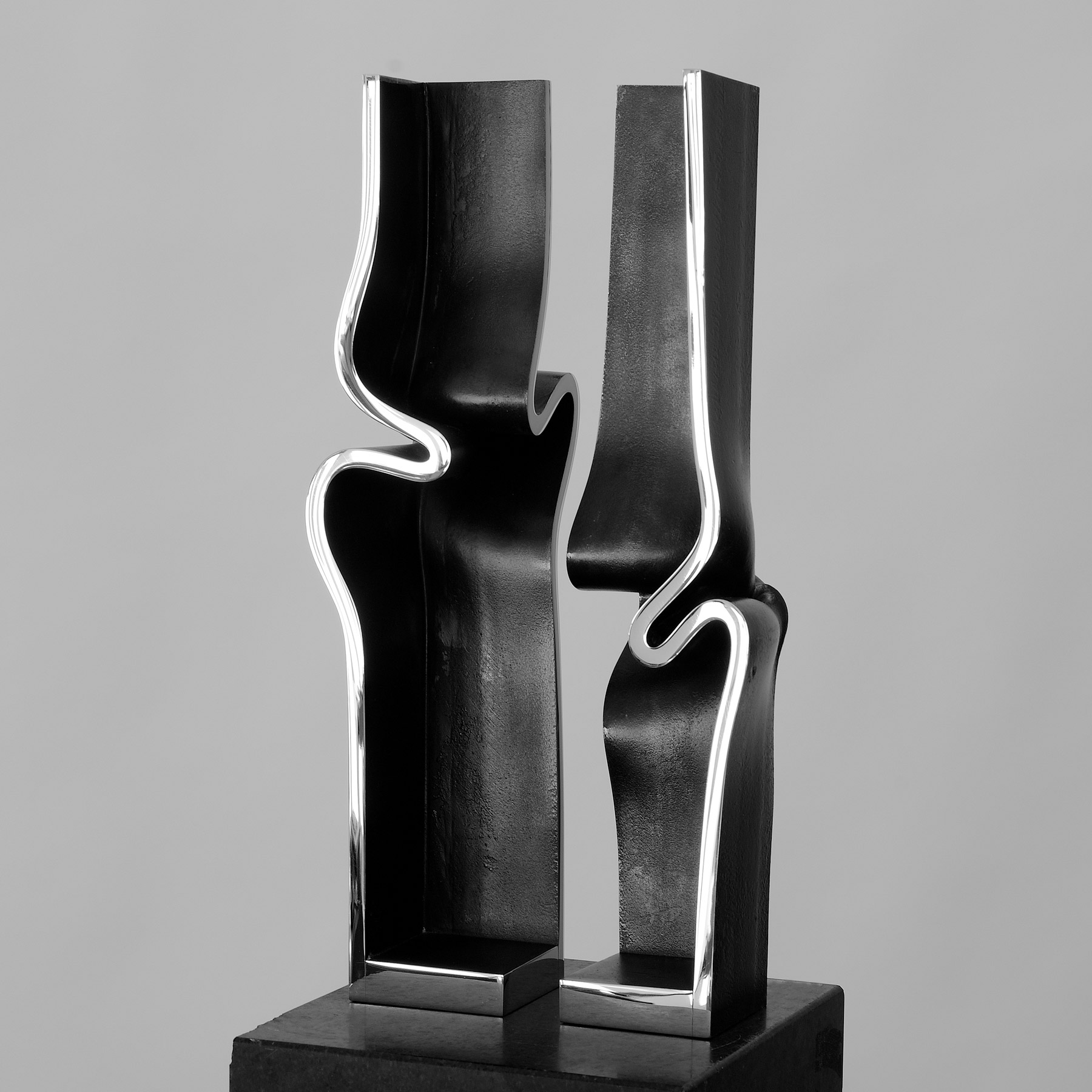
Shipwreck
Cycle 1992 – 2013
15 pieces of different sizes and design
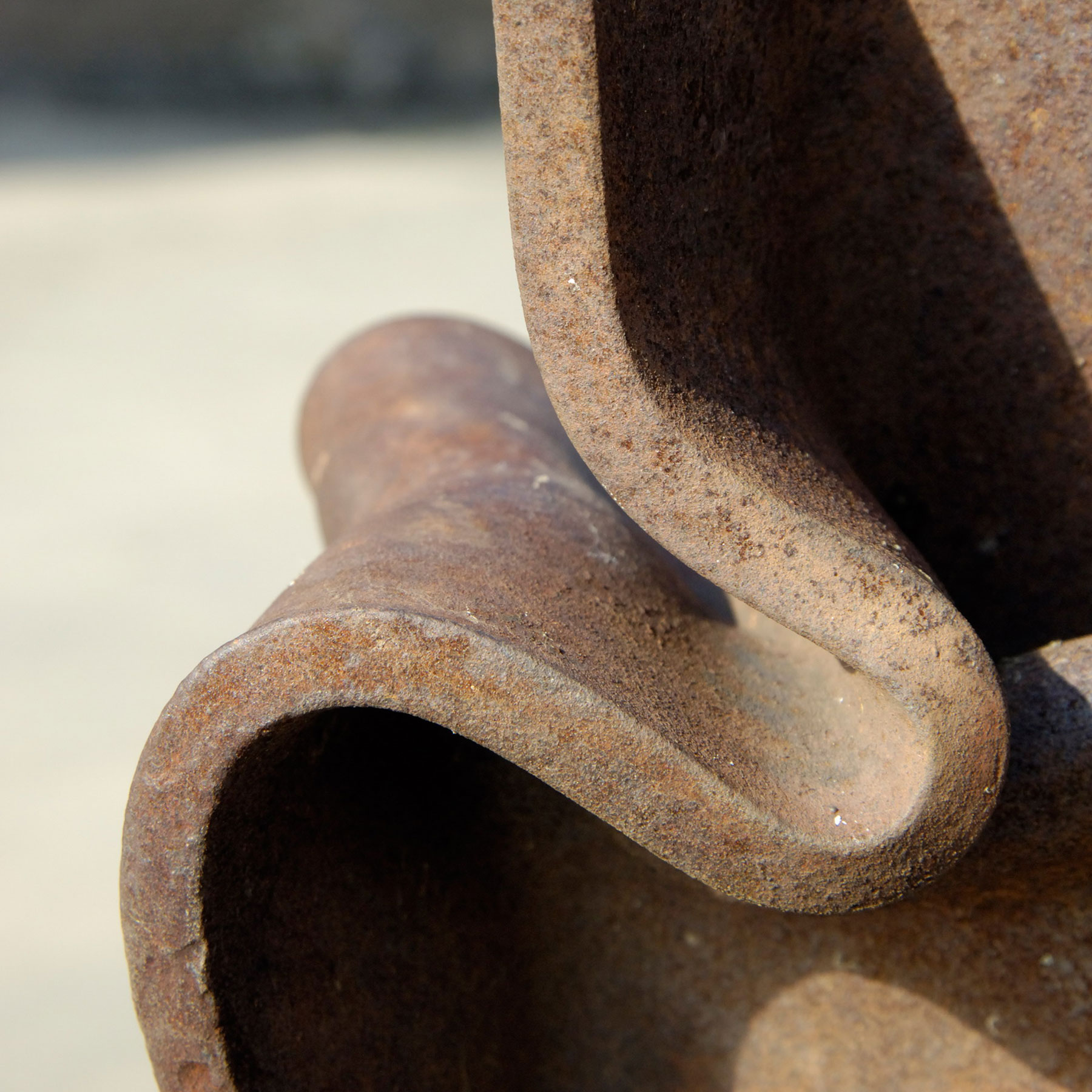
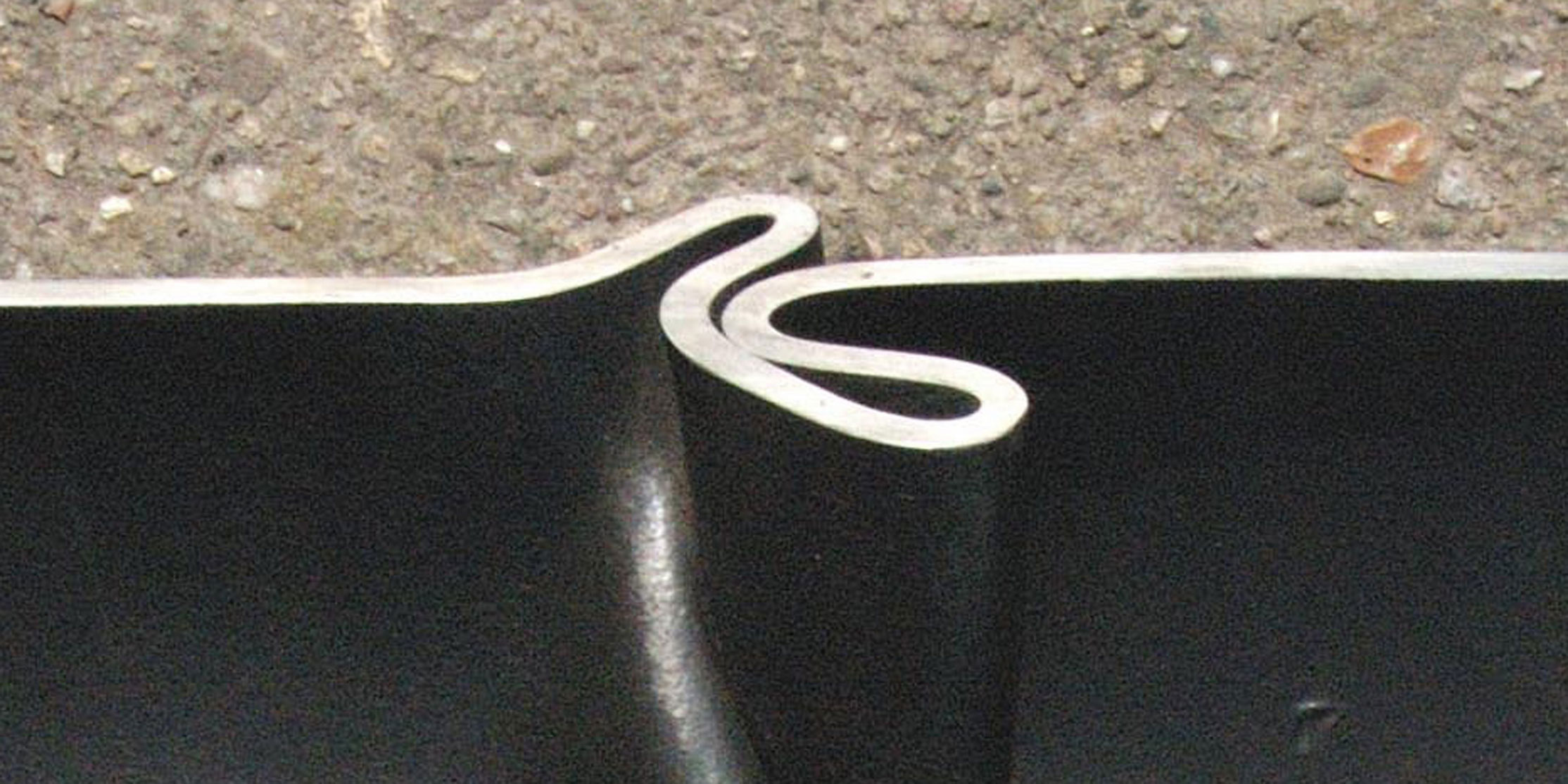
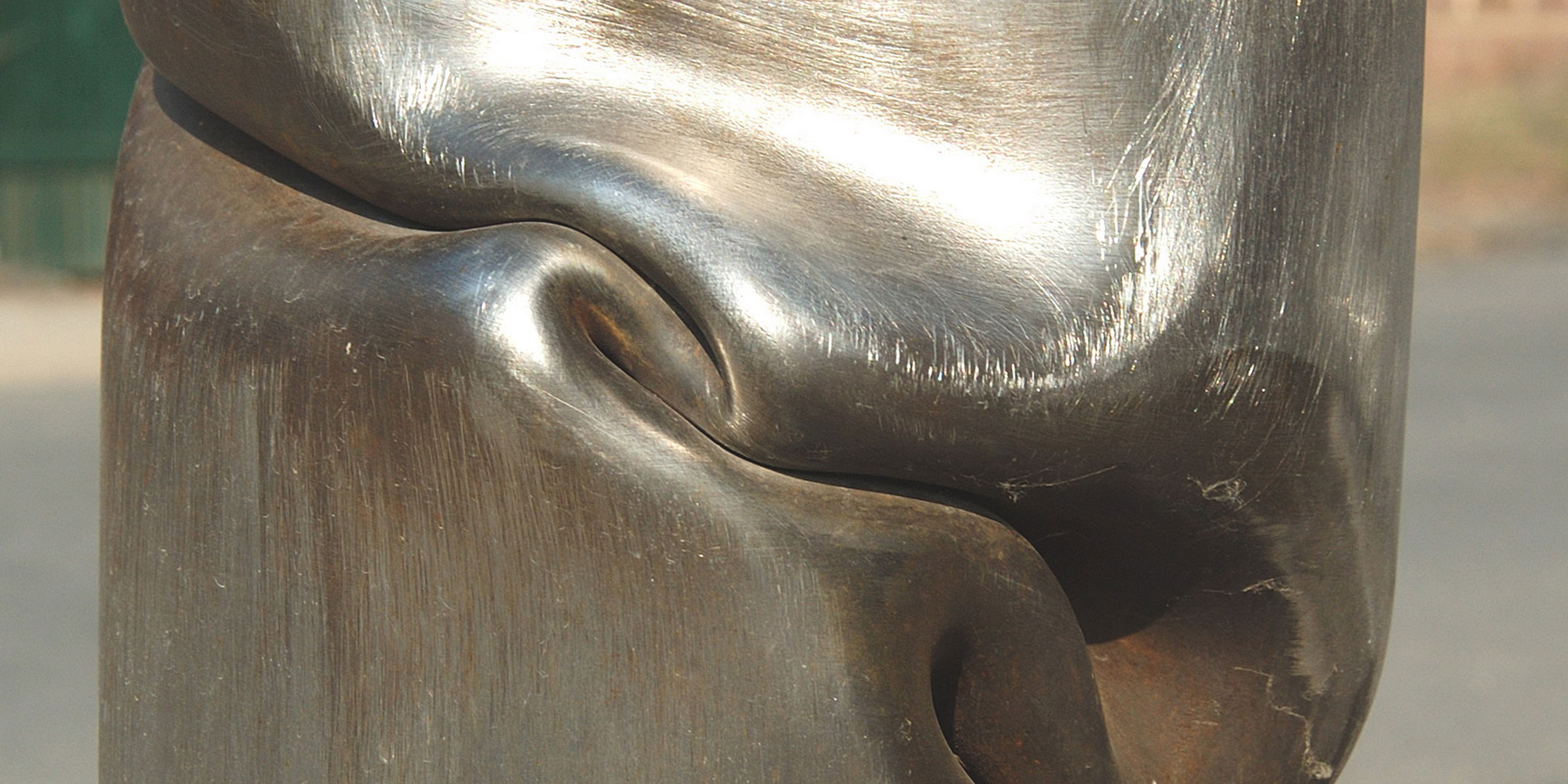
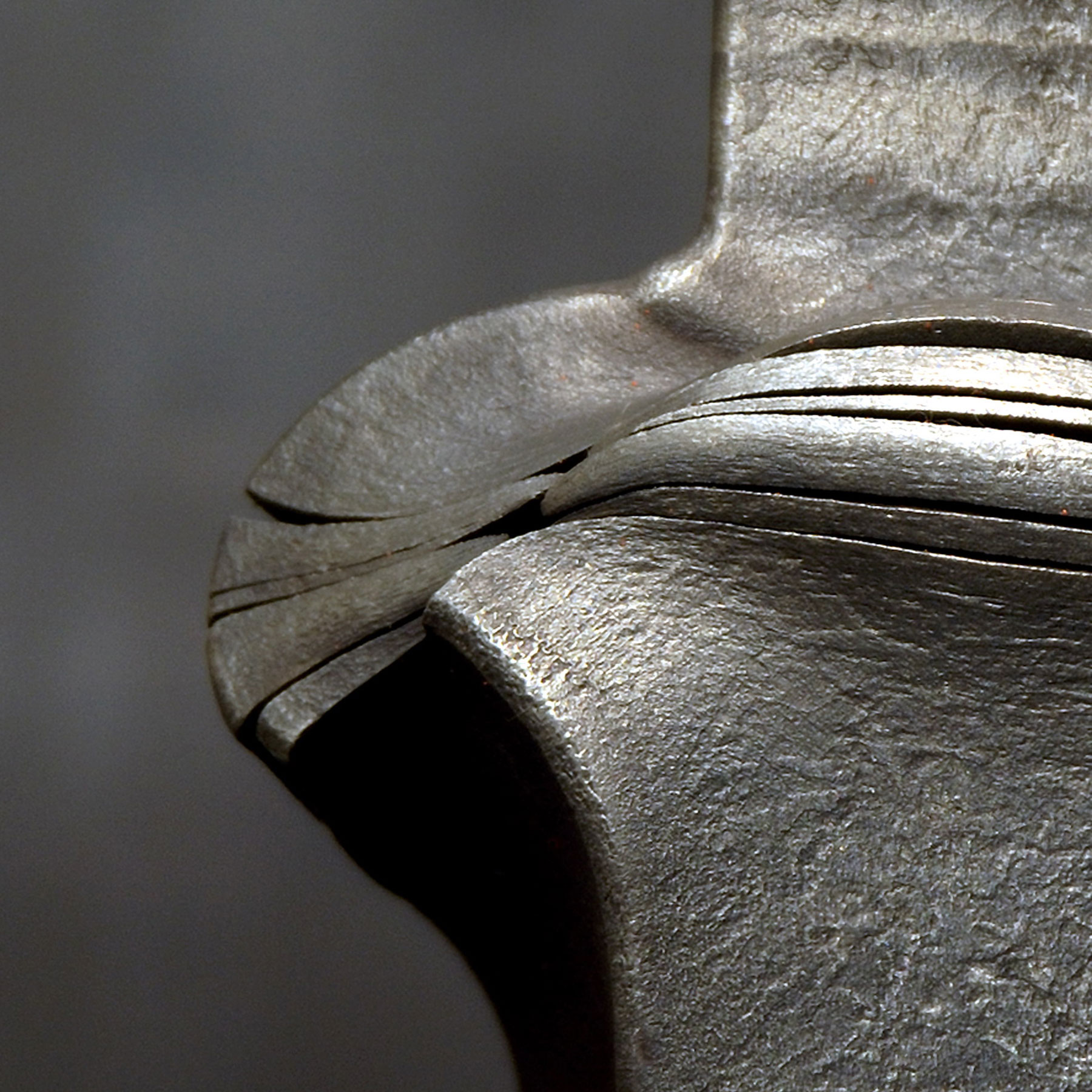
When steel is subjected to invasive forces it responds by yielding to them in ways that result in subtle deformations. These new forms do not arise randomly – the nature of the material leads it to take the path of least resistance, reducing its surface area and shielding itself against further stresses. Using collapsed steel plates and girders, Wolf portrays the strength of steel in the moment that it fails. The picture of deformation that one sees in his ‘Shipwrecks’ makes the force that caused it become physically tangible. Even though the process is brutal the resulting form has elegance and harmony – a striking contrast between the event and its consequences.
The title speaks of the sea and man’s mastery of it but also of man’s annihilation by the force of the sea. Ships belong to the supreme technical achievements of ‘Man the Creator’, built as they are from the strongest substance at his disposal – steel, and yet when the sea strikes back it will bend even steel. ‘Shipwrecks’ is a metaphor for man’s hubris and his inability to recognise his physical limits, as well as for the technical failure of human creation and its transience when exposed to the power of Nature.
The fascination of these contrasts has led Wolf over the years to produce this cycle, subjecting strong metal sheets and above all their supporting sections to deliberate overloading. Strong girders are the epitome of the unfaltering strength of steel, manifesting technical capacity and cultural progress. Without steel there are no surpluses, no wellbeing, and no culture. And yet – as well as dominion and power – steel also represents struggle and defeat.